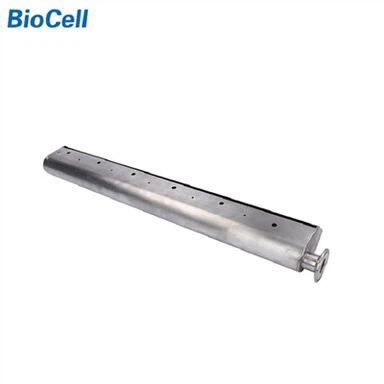
Factors affecting the oxygen transfer efficiency of MBBR coarse bubble diffusers
Aug 07, 2024
1. Diffuser characteristics
Bubble size:
Smaller bubbles have a larger specific surface area, which can increase the gas-liquid contact area, thereby improving the oxygen transfer efficiency. In contrast, large bubbles have a smaller specific surface area and a relatively low oxygen transfer efficiency.
For example, the use of microporous diffusers can produce tiny bubbles, which significantly improves the oxygen transfer efficiency, but may be prone to clogging. Coarse bubble diffusers produce larger bubbles, with a relatively low oxygen transfer efficiency, but are not prone to clogging.
Bubble distribution:
Uniform bubble distribution can ensure that all areas in the reactor can get sufficient oxygen supply and improve the overall oxygen transfer efficiency. If the bubble distribution is uneven, it will lead to insufficient oxygen in local areas, affecting the treatment effect.
For example, using specially designed diffusers, such as porous plates, annular diffusers, etc., can achieve a more uniform bubble distribution.
Diffuser material:
The material of the diffuser affects its surface properties and oxygen transfer performance. Some materials have better hydrophilicity and gas permeability, which can promote the transfer of oxygen.
For example, diffusers made of materials such as silicone and ceramics may have a higher oxygen transfer efficiency.
2. Wastewater characteristics
Temperature:
Wastewater temperature has a significant effect on the solubility and diffusion coefficient of oxygen. Generally speaking, an increase in temperature will reduce the solubility of oxygen, but increase the diffusion coefficient of oxygen.
Within a certain range, higher temperatures may increase the efficiency of oxygen transfer, but too high a temperature may have an adverse effect on microorganisms.
pH value:
The pH value affects the existence form of oxygen in wastewater and the activity of microorganisms. Different microorganisms have different oxygen requirements and metabolic capabilities at different pH values.
For example, some microorganisms are more likely to absorb oxygen under acidic conditions, while the oxygen transfer efficiency may be reduced under alkaline conditions.
Concentration of pollutants:
The concentration of pollutants in wastewater affects the resistance to oxygen transfer. High concentrations of organic matter, suspended solids and other pollutants may form a fouling layer on the surface of the diffuser, hindering the transfer of oxygen.
In addition, some pollutants may react with oxygen, consume oxygen, and reduce the efficiency of oxygen transfer.
3. Operating conditions
Aeration intensity:
Aeration intensity refers to the amount of air introduced into the reactor per unit time. Increasing the aeration intensity can increase the generation rate and number of bubbles, increase the gas-liquid contact area, and thus improve the efficiency of oxygen transfer.
However, excessive aeration intensity may lead to problems such as bubble merging and increased water flow shear force, which will reduce the oxygen transfer efficiency. At the same time, excessive aeration intensity will also increase energy consumption and operating costs.
Hydraulic retention time:
Hydraulic retention time refers to the residence time of wastewater in the reactor. A longer hydraulic retention time can give oxygen more time to transfer to the water and improve the oxygen transfer efficiency.
However, too long hydraulic retention time will reduce the treatment capacity of the reactor, increase the floor space and construction cost. Therefore, it is necessary to select a suitable hydraulic retention time according to the actual situation.
Water flow state in the reactor:
The water flow state in the reactor will affect the movement trajectory of the bubbles and the gas-liquid contact time. Good water flow mixing can make the bubbles evenly distributed in the reactor, increase the gas-liquid contact area, and improve the oxygen transfer efficiency.
For example, the use of equipment such as agitators and reflux pumps can improve the water flow state in the reactor and improve the oxygen transfer efficiency.
4. Biofilm characteristics
Biofilm thickness:
The thickness of the biofilm will affect the diffusion resistance of oxygen in the biofilm. Thicker biofilms will increase the oxygen transfer resistance and reduce the oxygen transfer efficiency.
Therefore, the thickness of the biofilm needs to be controlled to avoid excessive growth. The thickness of the biofilm can be controlled by adjusting the operating parameters and cleaning the filler regularly.
Biofilm activity:
The activity of the biofilm affects its demand for oxygen and its utilization efficiency. Biofilms with higher activity can absorb and utilize oxygen more effectively, improving the efficiency of oxygen transfer.
The activity of the biofilm can be improved by optimizing the operating conditions and adding nutrients.
If you want to know the factors that affect the oxygen transfer efficiency of MBBR coarse bubble diffusers, you are welcome to follow www.biocell-enviro.com!